
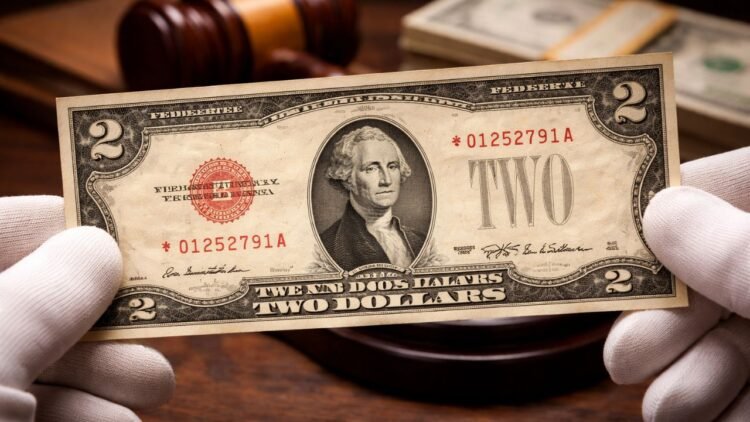
Among the most coveted pieces in American currency collecting, the 1928E $2 Star Note stands in a league entirely its own. This extraordinarily scarce bill — a replacement note issued by the U.S. Bureau of Engraving and Printing during the late 1920s and early 1930s — is now heading to a major public auction, sending waves of excitement through the numismatic community. Whether you are a seasoned collector or a curious enthusiast, this event represents one of those rare moments in currency history that demands attention.
What Makes the 1928E $2 Star Note So Special?
The Origins of the $2 Legal Tender Star Notes
The 1928 series of $2 Legal Tender Notes was produced across multiple sub-series, labeled 1928A through 1928G. Star notes within this series were printed to replace damaged or misprinted bills during the production process, making their original quantities considerably smaller than regular-issue notes. The 1928E $2 Star Note, in particular, was produced in an astonishingly limited quantity, placing it firmly among the rarest surviving pieces of American paper currency.
Experts and grading services have confirmed that only a handful of these notes are known to exist in collectible condition today. The combination of its already-limited original mintage and the natural attrition of time — through circulation, loss, and destruction — has made each surviving example an object of intense desire among collectors of rare U.S. currency.
Why Star Notes Were Issued
When a sheet of currency was found to be defective during the printing process, the Bureau of Engraving and Printing could not simply leave gaps in the serial number sequence. Instead, replacement notes — identifiable by a star symbol (★) at the beginning or end of their serial numbers — were inserted to fill those gaps. This system ensured accurate accounting of every note produced. As a result, star notes have always been produced in smaller numbers than standard issues, giving them an inherent collectibility premium.
Rarity Data: A Closer Look at the Numbers
To truly appreciate how exceptional the 1928E $2 Star Note is, it helps to compare it with other notes from the same series.
| Series | Estimated Star Notes Known | Relative Rarity |
|---|---|---|
| 1928 $2 Star Note | Several hundred | Common (within star notes) |
| 1928A $2 Star Note | Dozens | Scarce |
| 1928B $2 Star Note | Moderate survivors | Uncommon |
| 1928C $2 Star Note | Very few known | Rare |
| 1928D $2 Star Note | Extremely limited | Very Rare |
| 1928E $2 Star Note | Fewer than 10 known | Ultra-Rare |
| 1928F $2 Star Note | Limited survivors | Rare |
| 1928G $2 Star Note | Moderate | Uncommon |
As the table illustrates, the 1928E sits at the very apex of rarity within its series. Fewer than ten examples are believed to exist in any grade, making each appearance at auction a landmark event in the world of rare paper money collecting.
The Upcoming Auction: What Collectors Need to Know
Condition and Grading
The note heading to auction has reportedly been certified and graded by one of the leading professional currency grading services. The grade assigned to a note like this plays an enormous role in determining its final sale price. Higher-grade examples — those showing minimal wear, strong ink color, and sharp corners — can command multiples of what a circulated specimen might bring. Given the extreme scarcity of the 1928E $2 Star Note, even a well-worn example in lower grades fetches prices that most regular currency could never approach.
Expected Hammer Price
While pre-auction estimates can vary, experts in the rare currency market anticipate this note could achieve a price well into the five-figure range, with premium examples having the potential to push even higher depending on competitive bidding. Previous auction appearances of similarly rare Depression-era star notes have consistently broken records, and collector demand for top-tier American currency rarities continues to grow year over year.
Who Is Bidding?
Interest in this auction is expected to draw participation from advanced collectors of U.S. paper money, institutional buyers, and investors who recognize the long-term value of holding a truly irreplaceable piece of American financial history. The global reach of major auction platforms also means international bidders could drive the final price beyond domestic expectations.
The Broader Significance of Rare Currency Collecting
The 1928E $2 Star Note is more than just a financial instrument — it is a tangible artifact of American economic history from the era between the two World Wars. Collectors who pursue rare U.S. paper money are, in many ways, preserving history that might otherwise be forgotten. Each note carries with it the story of the printing presses that produced it, the hands it may have passed through, and the economic climate of its time.
The growing market for rare Legal Tender Notes and other obsolete U.S. currency reflects a broader appreciation for numismatics as both a hobby and an investment. As fewer pristine examples of scarce notes survive with each passing decade, the existing specimens only grow in significance and monetary value.